The short version
- The diaphragm is a dome-shaped muscle of inspiration; it does not need strengthening in most healthy adults, it needs the right length.
- Posture and clothing change its mechanical advantage more than any exercise does.
- "Breathe into your belly" is a useful cue for some people and a confusing one for others; rib expansion is the better target.
- Persistent breathlessness, orthopnoea or a raised shoulder pattern at rest deserve assessment, not drills.
Few muscles carry as much moral weight as the diaphragm. It is described as weak, lazy, forgotten, sleeping. The language of fitness has been applied to a structure that works continuously from before birth to death without a single conscious instruction, and the implication is that most people are doing it wrong.
Sometimes they are. But the problem is almost never strength. A diaphragm that has been breathing for forty years is not weak; it is being asked to operate at a mechanical disadvantage, hour after hour, by posture, by habit, by a waistband, or by an airway that makes nasal breathing feel like work.
A muscle with a shape
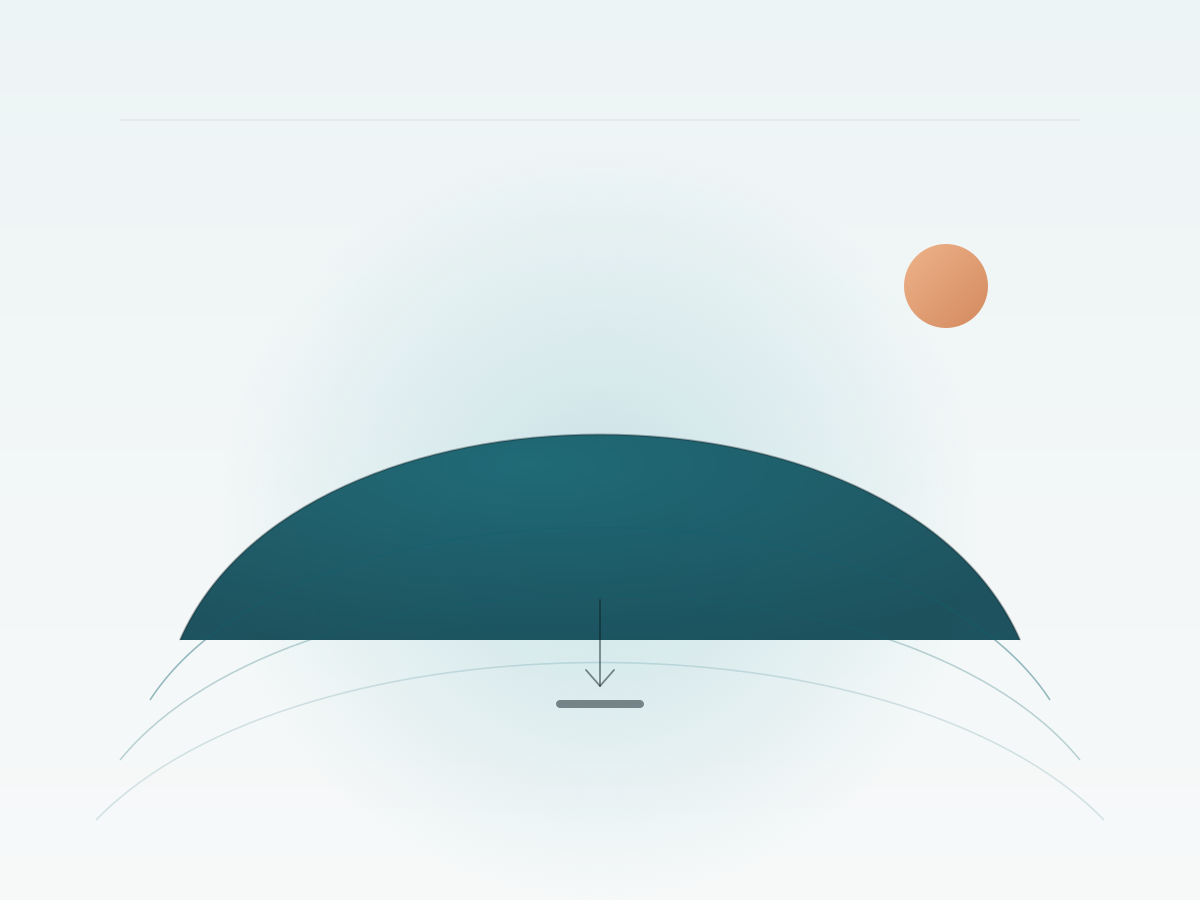
The diaphragm is a thin dome that separates the chest from the abdomen. When it contracts, it flattens and descends, increasing the volume of the thoracic cavity and lowering the pressure inside it. Air enters because of that pressure difference, not because the lungs suck.
Two details matter for practice. First, the diaphragm is attached to the lower ribs, the sternum and the lumbar spine, so its action inevitably moves the lower rib cage. Second, its efficiency depends on the length at which it starts: a flattened dome — the shape it takes when the abdomen is distended or the lower ribs are chronically flared — has less room to descend.
This is why "belly breathing" is an incomplete instruction. Pushing the abdomen out can change the shape of the dome without improving its excursion, and in people with a strong baseline thoracic pattern it can simply replace one exaggerated movement with another. The observable target is a gentle expansion of the lower ribs laterally and posteriorly, with the abdomen moving as a consequence rather than as a goal.
You cannot strengthen a muscle that is already working twenty thousand times a day. You can only change the position from which it works.
Nadia Farouk, respiratory physiologist
Posture changes the length, not the strength
Slumped sitting is the most common mechanical insult, and it works through two routes. A flexed spine reduces the vertical space available for the dome to descend, and a forward head position changes the tone of the accessory muscles in the neck, which then take a larger share of each breath.
The result is a familiar pattern: visible shoulder lift on inhalation, minimal lower-rib movement, and a breath that stops in the upper chest. It is not that the diaphragm has stopped working; it is that the accessory muscles have been recruited to compensate, and the compensation has become the habit.
Clothing belongs in the same conversation. A tight waistband raises intra-abdominal pressure and restricts descent. So does habitual abdominal bracing, which many people adopt for postural reasons and never release. If you want to test whether this matters for you, spend a day in loose clothing and notice whether your breathing feels different by evening.
A two-minute self-check
Sit on the front half of a chair, feet flat, spine tall but not rigid. Place one hand on the lower ribs at the side, thumb towards the back, and the other hand on the upper chest. Breathe normally for ten breaths and observe three things.
- Where does movement start? If the upper hand rises before the lower hand widens, the pattern is thoracic-dominant.
- Does the lower rib cage widen sideways? A useful breath produces lateral expansion at the level of the lowest ribs, not just a forward push.
- Is the exhale passive? A normal exhale is a release, not a push. If you are actively emptying, you are probably over-ventilating.
Then lie on your back with knees bent and repeat. Most people find the lower ribs move more easily in this position, which is itself informative: it suggests the standing pattern is being limited by posture rather than by the muscle.
Do not chase the belly
A visible rise of the abdomen is not proof of diaphragmatic breathing, and its absence is not proof of the opposite. Some people with a strong diaphragm show very little abdominal movement; some people with a dominant upper-chest pattern can push the belly out deliberately. Watch the lower ribs.
Three cues that work better than "breathe deeply"
1. Start with the exhale, not the inhale. Ask for a quiet, unhurried exhale through the nose and let the next inhale arrive on its own. Most people inhale with too much effort; removing the instruction to inhale removes the effort.
2. Aim for width, not depth. "Let the lower ribs widen" produces a more physiological pattern than "fill your belly". Place a hand on the side of the rib cage and aim for that hand to move outward by a centimetre.
3. Change the environment before you change the exercise. Recline the seat slightly, loosen the waistband, raise the screen, and take three breaths before returning to the task. A cue that only works while you concentrate is not a habit; it is a performance.
For a structured five-minute practice, the sequence that follows from this is simple: two minutes of quiet nasal breathing in a supported sitting position, one minute of gentle lower-rib expansion with a long exhale, one minute of normal breathing, one minute of standing and noticing the difference.
What changes, and how slowly
People notice two things first, usually within a week: their breathing becomes quieter, and they sigh less. Both are consequences of a longer exhale and a lower resting rate, not evidence of a stronger muscle.
Changes in resting posture take longer, and they are not achieved by breathing exercises alone. If your working day is spent in a position that shortens the front of the body, five minutes of rib expansion will be undone by six hours of sitting. The useful intervention is a change in the chair, the screen height, or the number of times you stand up.
And some patterns are not mechanical at all. Breathlessness on exertion, breathlessness lying flat, a persistent cough, noisy breathing, or a shoulder pattern that does not change even when you are reclined — these are reasons to see a clinician, not to add another exercise. The diaphragm is a muscle, but it is also a symptom site, and the two should not be confused.
References
- Hodges PW, Gandevia SC. Activation of the human diaphragm during a prolonged postural task. J Physiol. 2000;526:195–205.
- De Troyer A, Estenne M. Functional anatomy of the respiratory muscles. Clin Chest Med. 1988;9(2):175–193.
- Aliverti A, et al. Human respiratory muscle actions and control during exercise. J Appl Physiol. 1997;83(4):1256–1269.
- McConnell AK. Respiratory muscle training: theory and practice. Elsevier; 2013.
- Chaitow L, Bradley D, Gilbert C. Recognizing and treating breathing disorders. 2nd ed. Churchill Livingstone; 2013.